
Estimated reading time: 2 minutes
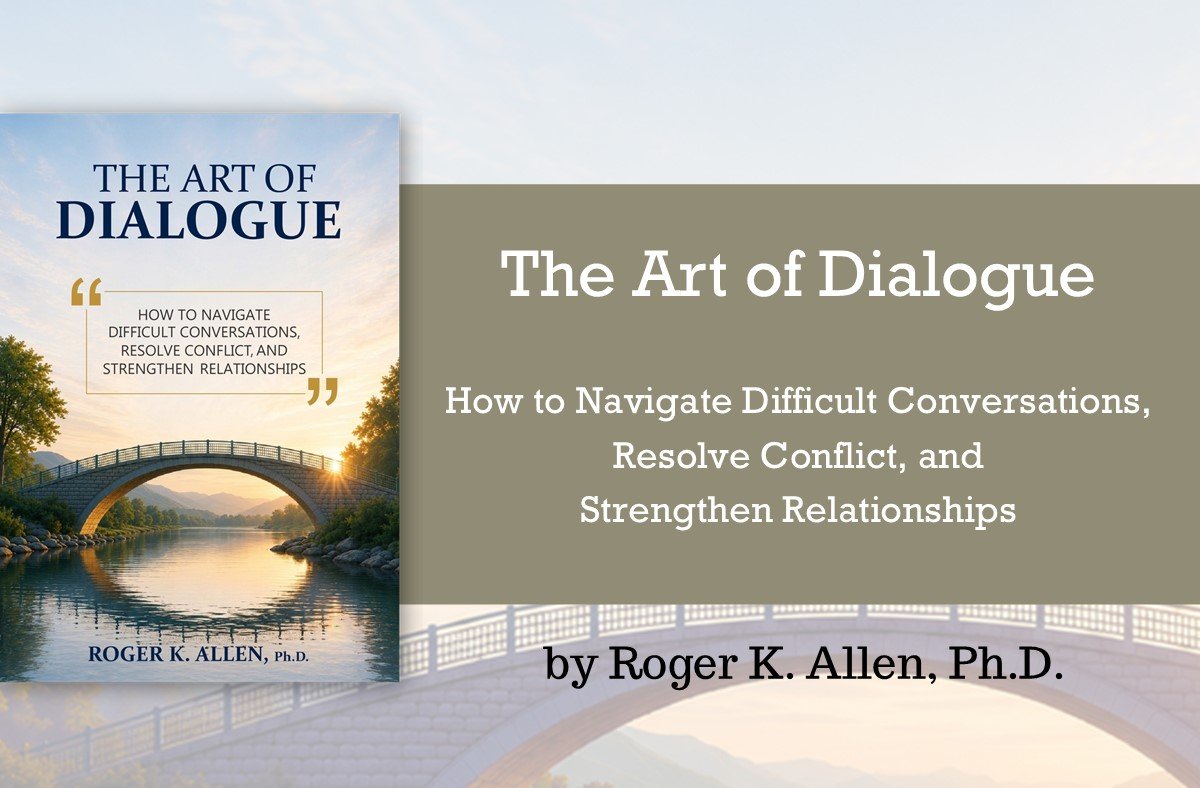
The Art of Dialogue: How to Navigate Difficult Conversations, Resolve Conflict, and Strengthen Relationships
By Roger Allen
Disagreement Is Inevitable.
Contention Is Not.
We live and work with people who see the world differently than we do. We come from different backgrounds and bring different personalities, experiences, needs, values, goals, and priorities to our relationships. Disagreement is inevitable.
But disagreement does not have to become destructive conflict.
The question is not whether we will experience differences, but how we will respond when we do.
Book Description
The Art of Dialogue offers a practical and psychologically grounded approach to navigating difficult conversations with greater awareness, empathy, honesty, and skill. Whether the disagreement occurs with a spouse, family member, friend, colleague, or someone whose beliefs differ sharply from your own, the principles of dialogue can help you move beyond defensiveness and polarization toward greater understanding and constructive action.
Why Difficult Conversations Become So Difficult
When we feel threatened, misunderstood, dismissed, or attacked, we naturally react. Some of us become aggressive and fight. Others withdraw, appease, defend, blame, or avoid the conversation altogether.
These reactions may protect us in the moment, but they often make things worse.
Constructive dialogue begins with learning to manage what happens inside us. Before we can create understanding with another person, we must become aware of our own thoughts, emotions, assumptions, and reactions.
In this sense, dialogue begins within.
When we become more grounded and take responsibility for our own inner state, we are better able to listen with empathy, speak with honesty, and remain present when conversations become difficult.
A Better Way to Navigate Differences
Dialogue is more than talking. It is a way of engaging with others that makes room for both honesty and understanding.
It requires the courage to express what matters to us and the humility to genuinely understand another person’s experience and point of view. The goal is not necessarily agreement. It is to create enough safety and shared understanding that people can move beyond defensiveness and work together constructively.
The Art of Dialogue will help you:
- Stay calm and grounded when conversations become emotionally charged
- Distinguish disagreement from unhealthy conflict
- Recognize the patterns that cause conflict to escalate
- Understand your communication style and how it affects others
- Take responsibility for your own thoughts, feelings, and reactions
- Decide when and how to initiate a difficult conversation
- Create the emotional safety necessary for honest communication
- Listen with empathy and speak with clarity and courage
- Balance inquiry—seeking to understand—with advocacy—sharing your own perspective
- Transform defensiveness and polarization into understanding and collaboration
- Develop solutions that respect the legitimate concerns of everyone involved
The Four Phases of Dialogue
At the heart of the book is a practical four-phase framework for navigating difficult conversations.
Preparation
Begin with yourself. Understand your reactions, clarify what matters, and prepare to enter the conversation with greater awareness and emotional maturity.
Invitation
Create the conditions for a productive conversation through respect, a soft start-up, and clarity about your intentions and concerns.
Exploration
Seek to understand before rushing to solve. Listen deeply, share your own perspective honestly, and build a fuller pool of shared understanding.
Collaboration
Work together to identify options, evaluate possibilities, and reach agreements that address the concerns of those involved.
These phases provide a practical roadmap for conversations that might otherwise become defensive, adversarial, or avoidant.
Dialogue Matters Everywhere
The ability to navigate differences is one of the most important skills we can develop.
It matters in marriages and families. It matters in friendships and workplaces. It matters in leadership, communities, and public life.
The most effective people are not those who avoid disagreement. They are able to remain grounded in the presence of differences. They can listen without surrendering their own point of view, speak honestly without attacking, and enter conversations that others may be tempted to avoid.
The Art of Dialogue is filled with stories, examples, case studies, practical tools, and exercises that will help you apply these principles in your own life.
Because disagreement is inevitable.
Contention is not.
Reviews
