
As a marriage therapist, I’ve watched couples—good individuals and committed partners—find themselves stuck in the same painful cycles, often unsure how to have a healthy marriage when it matters most.
When Good Intentions Aren’t Enough to Have a Healthy Marriage
Through these experiences, I’ve come to realize that most marital problems are not due to a lack of love. The problem is that, in moments of vulnerability (I like to call them key moments), couples don’t know what to do.
In the early days of dating, couples experience the high of enchantment and are often willing to look past one another’s faults. They aren’t thinking about the skills required to make a marriage work. They assume that love, commitment, and shared values will carry them through.
And for a while, they do.
But over time, stress, differences, disappointments, and misunderstandings begin to surface. And in those moments, couples often fall back on instinct. They react, defend, and withdraw. They try to fix things quickly. And sometimes those responses help, but more often they don’t.
As these patterns repeat, couples begin to feel discouraged. They start to wonder if something is fundamentally wrong with the relationship—or with each other. Sometimes one or the other will conclude that the problem is that they married the wrong person. Some stay out of obligation. Others leave in search of the “right” partner.
What I’ve Come to See
Over the years, my understanding has shifted. I used to think the key to a strong relationship was insight—helping couples understand themselves and each other more clearly.
Insight does matter.
But it doesn’t reliably change what happens in the moment. Strong relationships are built on something more practical and more repeatable: habits–the daily ways couples learn how to have a healthy marriage in real life.
Not habits in the sense of rigid routines, but in the ways people consistently show up for each other—especially when it’s difficult. How they respond when they feel hurt. How they listen when they disagree. How they take responsibility when things go wrong. How they move toward each other instead of away.
These strengthening patterns—often small and easily overlooked—shape the tone and direction of a relationship over time.
Why I Wrote This Book
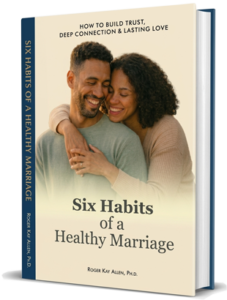
I wrote Six Habits of a Healthy Marriage to make these patterns visible and usable—not as theory, and not as an ideal, but as something couples can actually practice in real life.
The book grows out of sitting with couples in both ordinary and difficult moments—watching what helps and what doesn’t. It’s built around six habits that I’ve seen make a meaningful difference. Habits that support emotional safety, mutual respect, and the ability to stay connected even when things are not going smoothly.
My hope is not that couples will do these perfectly. It’s that they will begin to recognize these moments as they happen—and gradually respond in ways that strengthen rather than weaken the relationship.
A Direction, Not a Formula
There isn’t a single “right way” to have a healthy relationship. Every couple is different. Every relationship has its own history, personality, and challenges. But there are patterns that tend to move relationships in a constructive direction—and patterns that tend to create distance.
Learning to recognize those patterns, and gently shift them over time, is at the heart of how to have a healthy marriage.
Looking Ahead
Over the past weeks and continuing into the next few weeks, I’ll be sharing a few of the key ideas from the book—simple but important shifts that can make a meaningful difference in how couples relate to each other day to day.
If you’ve ever wondered how to have a healthy marriage in the real moments of day-to-day living, you may find Six Habits of a Healthy Marriage a helpful next step. (Watch for it in early May.) My hope is that it offers something practical you can return to and apply in those real, vulnerable moments that shape the health of your relationship.
